
A door hesitates for half a second before it drops. A faint grind shows up on a cold morning. One side looks a touch lower than the other when it closes. None of it seems urgent, so most homeowners let it ride.
That's usually how a small garage door problem turns into a bigger one. The door has been telling you something — quietly — and the longer those hints go unchecked, the more likely you are to come home to a door that's stuck open, off its tracks, or too heavy to lift by hand.
You don't need to diagnose the issue yourself. But knowing what to watch for helps you call for help before a worn part becomes a broken one. These are seven of the most common signs we run into doing garage door repair across Thomaston, Upson County, and the surrounding area.
1. New grinding, scraping, or popping sounds
A garage door in good shape has a rhythm to it — a steady hum from the opener, the soft roll of the rollers, and not much else. When that changes, pay attention.
Grinding often points to rollers that are worn or dry, or a track that isn't aligned the way it should be. A sharp pop can mean a hinge or roller is catching, or that a spring is under strain. These noises are usually the door asking for lubrication or an adjustment — but left alone, the same friction that's making the sound keeps wearing parts down.
If a tune-up would quiet things down, that's a much smaller job than replacing a roller that finally shattered. Our maintenance and tune-up service exists for exactly this stage.
2. The door opens or closes unevenly
Stand back and watch the door run a full cycle. If one side leads and the other drags, or the bottom doesn't sit level when it closes, something is pulling the door out of balance.
Often it's the springs. Torsion and extension springs are what actually do the heavy lifting, and when one side weakens or breaks, the door starts to travel crooked. Cables can cause the same effect if one has come loose or is fraying.
An uneven door isn't just a cosmetic issue. The imbalance forces the opener and the rest of the hardware to work harder on one side, which accelerates wear and can eventually pull the door off its tracks. If you notice the door sitting crooked, it's worth having it looked at — and spring replacement or a cable repair may be the fix.
3. Slow or hesitant movement
A door that used to open in a few seconds now takes its time, pausing or straining partway through. Sometimes it barely makes it.
This is a sign the system is fighting something. The springs may be losing their tension, a track may be binding, or the opener is being asked to lift a door that's no longer balanced. The door still moves — so it's easy to put off — but that hesitation means the opener is carrying load it wasn't designed for.
An opener working that hard wears out faster. Having the balance and hardware checked early can often save the opener and prevent a sudden failure down the road.
4. The door won't fully open or close
This one is hard to ignore. Maybe the door stops short of the floor and reverses back up. Maybe it won't open all the way and leaves you ducking under it.
A few things can cause this. The safety sensors near the floor may be misaligned or blocked, which tells the opener to reverse. The travel limits on the opener may need adjusting. Or a mechanical issue — a bent track, a binding roller — is physically stopping the door before it completes its run.
A door that won't close all the way is also a security and weather concern, since the garage is often attached to the house. If you're seeing the door reverse or stop short, opener service can determine whether it's a sensor, a setting, or a mechanical problem.
5. Visible damage to cables, tracks, or rollers
You don't have to be a technician to spot some of these. A cable that's frayed or hanging loose, a track that's bent outward, or rollers that look cracked and worn are all visible from the ground.
Cables are part of the lifting system, and a frayed one is one snap away from failing. A bent track forces the door to travel a path it wasn't designed for, which can push rollers out and bring the door off-track entirely.
If you see this kind of wear, it's a good time to call for cable and track repair before the next cycle is the one that breaks something.
6. Spring-related warning signs
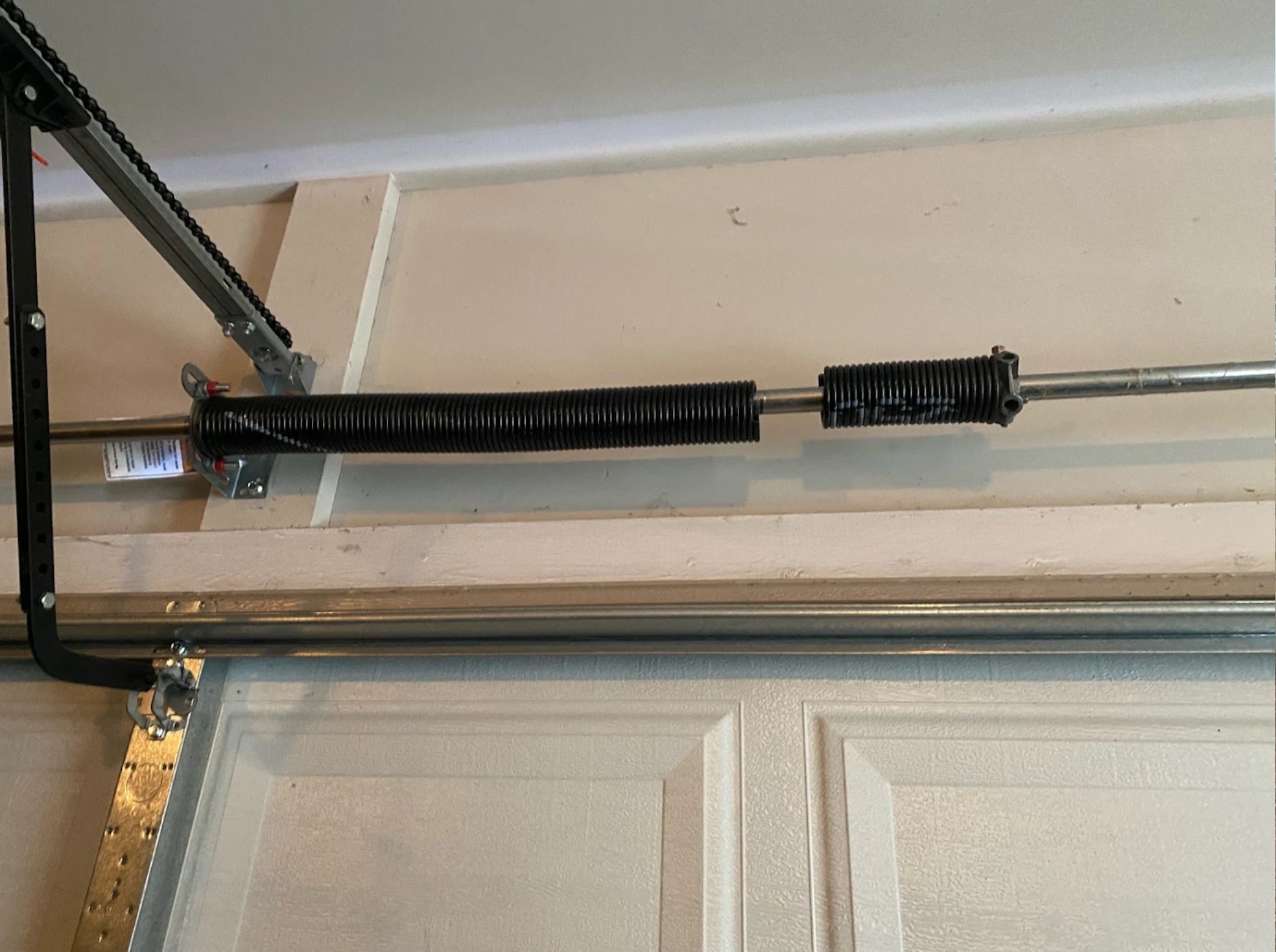
Springs have their own set of clues. A visible gap in a torsion spring means it has already broken. A loud bang from the garage — like a heavy metal snap — is often a spring letting go. A door that suddenly feels very heavy when you lift it by hand tells you the springs aren't doing their share anymore.
Here's the part that matters most: garage door springs are under significant tension, and so are the cables that work with them. They hold the weight of the door and the force required to move it. That tension is exactly why spring and cable repair is not a do-it-yourself job. Adjusting or removing these components without the right tools and training can cause serious injury.
If you suspect a spring problem, the safest move is to stop using the door and call a professional. We handle spring replacement using proper procedures and equipment, and we'd much rather do that than have a homeowner risk it themselves.
7. The opener is struggling or acting up
Sometimes the door is fine and the opener is the one complaining. The remote works intermittently. The wall button has to be pressed twice. The opener runs but the door doesn't move, or it reverses for no clear reason.
These can be opener issues — a worn gear, a failing logic board, a remote that needs reprogramming — but they can also be the opener reacting to a door that's out of balance. The opener is smart enough to stop when it meets too much resistance, which is a safety feature, not a flaw.
That's why an opener problem is worth evaluating alongside the rest of the door. Fixing the opener without checking the door can leave the underlying strain in place, and the new part wears out just like the old one did.
A note on spring and cable safety
Garage door springs and cables hold the weight of the door and the force required to move it. That tension is exactly why spring and cable repair is not a do-it-yourself job. Adjusting or removing these components without the right tools and training can cause serious injury. If you suspect a problem, stop using the door and call a professional.
A garage door that has started sounding, moving, or operating differently is usually telling you something. Having it checked early can help determine what is actually going on before you keep relying on it every day — and before a worn part becomes a broken one.
You don't have to figure out which sign matches your door. If something feels off, that's reason enough to have a professional take a look. We serve homeowners and businesses throughout Thomaston, Upson County, and the surrounding Middle Georgia area, and we're glad to help you decide whether you're looking at a quick repair, a worn part, or something that needs attention soon.
Serving Thomaston and nearby communities, All Access Garage Doors is here when your door starts talking. Request service or give us a call, and we'll help you get ahead of the problem.
Hearing something you don't recognize?
Let's catch it before it becomes a bigger repair. A local All Access Garage Doors technician serving Thomaston and surrounding Georgia communities can take a look.