GARAGE DOOR SPRING REPLACEMENT
The springs do the heavy lifting every time your garage door opens and closes — and when one fails, the door often stops working entirely. All Access Garage Doors provides professional garage door spring replacement for homeowners and businesses throughout Thomaston and surrounding Middle Georgia communities.
Garage door springs are under constant tension and wear down with every cycle. When a spring breaks or weakens, the door can become too heavy to lift safely or may not move at all. Below is what to know about broken and worn springs, the warning signs to watch for, and why spring replacement is a job for a trained professional.
Broken Garage Door Springs
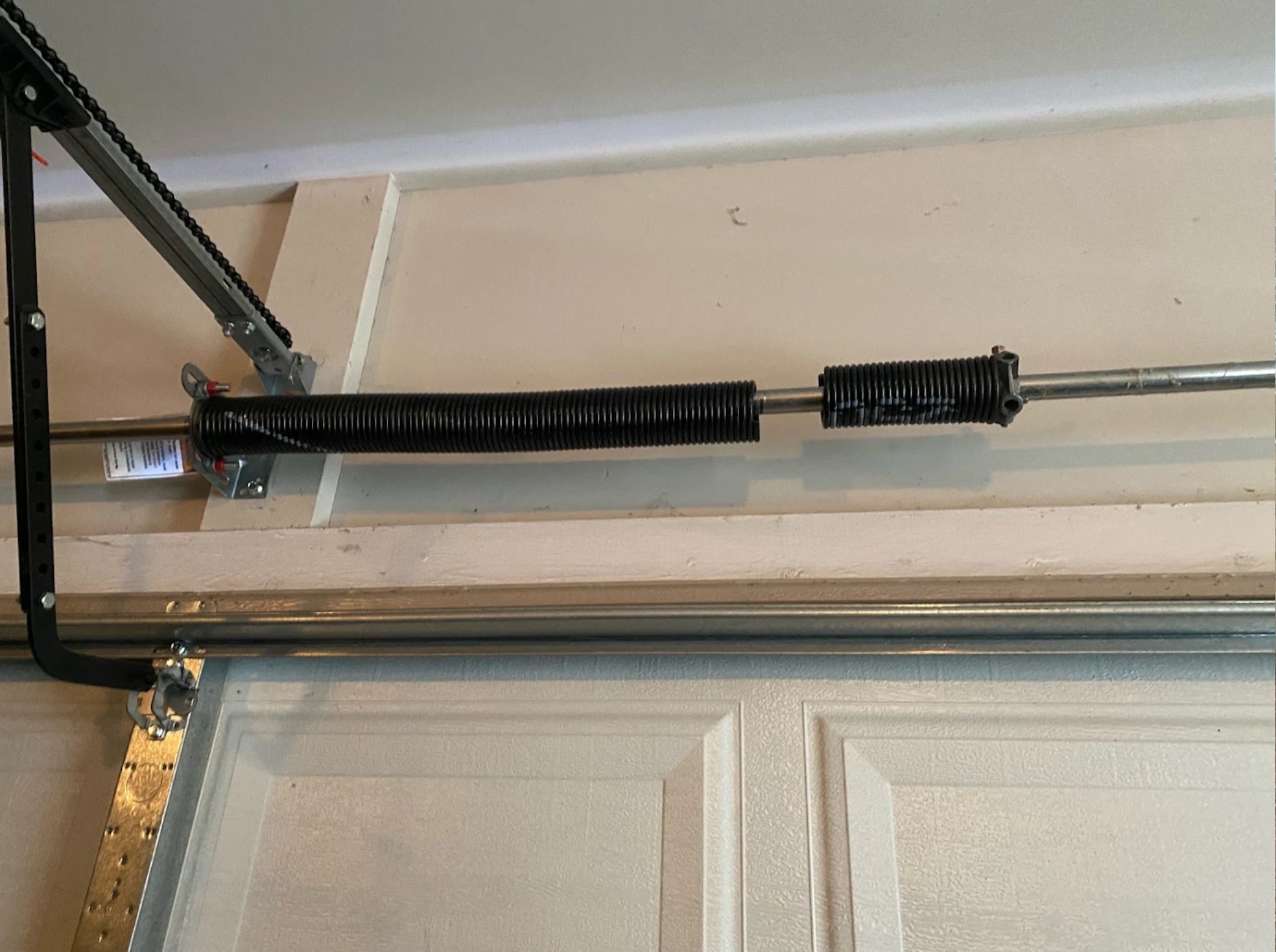
A broken spring is one of the most common reasons a garage door suddenly stops working. Torsion springs, mounted above the door opening, often fail with a loud snap and may show a visible gap where the spring has separated. Extension springs, which run along the upper tracks, can also break or lose their tension. When a spring breaks, the door loses the counterbalance that makes it safe to lift, so it should not be forced open or closed. We replace broken springs with quality parts matched to your door's weight and balance, then verify smooth, safe operation before we leave.
Worn or Damaged Springs
Springs do not always fail all at once. Over time, they can stretch, weaken, or develop rust and small cracks that reduce their strength. A worn spring may cause the door to feel heavy, open unevenly, close too quickly, or put extra strain on the opener. Replacing worn springs before they break helps you avoid a sudden failure and the inconvenience of a door that will not move. During a visit, a technician can assess the condition of your springs and let you know whether replacement is recommended.
Torsion Extension Spring Issues
Torsion and extension springs work differently but serve the same purpose — counterbalancing the weight of the door so it can be lifted safely. Torsion springs wind and unwind under high tension above the door, while extension springs stretch and contract along the tracks. Both types can develop issues from age, frequent use, rust, or improper balance. Identifying which spring system your door uses and matching the correct replacement requires experience, since the wrong spring can make the door unsafe or cause premature wear on the opener.
Signs a Spring May Need Replacement
A few warning signs can indicate that a garage door spring is nearing the end of its service life. If you notice any of the following, it is a good idea to have the door inspected before the spring fails completely:
Why Spring Replacement Requires a Professional
Garage door springs store a large amount of mechanical energy, and releasing that tension incorrectly can cause serious injury or damage. Winding and unwinding torsion springs requires specialized winding bars and the knowledge to handle them safely, while extension springs can snap back violently if they break without safety cables in place. A trained technician has the right tools and experience to remove the old springs, install the correct replacements, and balance the door so it operates safely. Attempting spring repair without proper experience is dangerous and is never recommended.
Professional Inspection Replacement
When you contact All Access Garage Doors, a technician inspects your door and springs, identifies the type and condition of the springs, and explains what is needed before any work begins. We replace broken or worn springs with parts matched to your door's weight and balance, check the related hardware such as cables and pulleys, and test the door to confirm it opens and closes smoothly and safely. Our goal is a dependable repair that restores safe operation to your garage door.
Residential Garage Door Spring Service
Most of the spring replacements we handle are for residential garage doors, where daily use gradually wears the springs down. Whether your door uses a single torsion spring or a pair of extension springs, we provide spring replacement service for homes throughout Thomaston and the surrounding Middle Georgia communities. If your garage door has stopped working or is showing signs of spring wear, we can help you get it moving safely again.
Common Spring Replacement Questions
Straightforward answers to the spring questions we hear most from Thomaston-area homeowners.
How do I know if my garage door spring needs to be replaced?
Common signs include a loud snap from the garage, a door that suddenly feels very heavy, a door that won't open at all, or a door that opens partway and stops. You may also see a visible gap in a torsion spring, which indicates it has broken. If you notice any of these signs, stop using the door and contact a professional.
What is the difference between torsion and extension springs?
Torsion springs are mounted horizontally above the door opening and wind up to store the energy that lifts the door. Extension springs run along the upper tracks and stretch as the door closes. Both types do the same job but wear out over time and eventually need replacement. A technician can identify which type your door uses and match the correct replacement.
Is it safe to replace a garage door spring myself?
No. Garage door springs are under extreme mechanical tension and can cause serious injury or property damage if released improperly. Spring replacement requires specialized tools and training to wind, unwind, and secure the springs safely. This is a job that should always be handled by a trained professional.
How long do garage door springs typically last?
Spring life depends on the spring type, the door weight, and how often the door is used. Most residential springs are rated for a set number of cycles, so a door used several times a day will wear out sooner than one used occasionally. Regular maintenance can help identify wear before a spring breaks unexpectedly.
Related Garage Door Services
A BROKEN SPRING WON'T FIX ITSELF — LET'S GET YOUR DOOR MOVING AGAIN.
Talk to a local All Access Garage Doors technician serving Thomaston and surrounding Georgia communities.