Does Your Garage Door Opener In Centerville Click But Not Start?
Most homeowners in Centerville think garage door openers are simple devices. Press a button, the door lifts. Press again, it closes. But when that familiar click happens and nothing moves, you're dealing with more than a minor glitch. That sound tells us the opener is trying to respond—power's flowing, the signal's received—but something's blocking the follow-through. And if we ignore it, we're not just inconvenienced. We're risking bigger damage down the line.
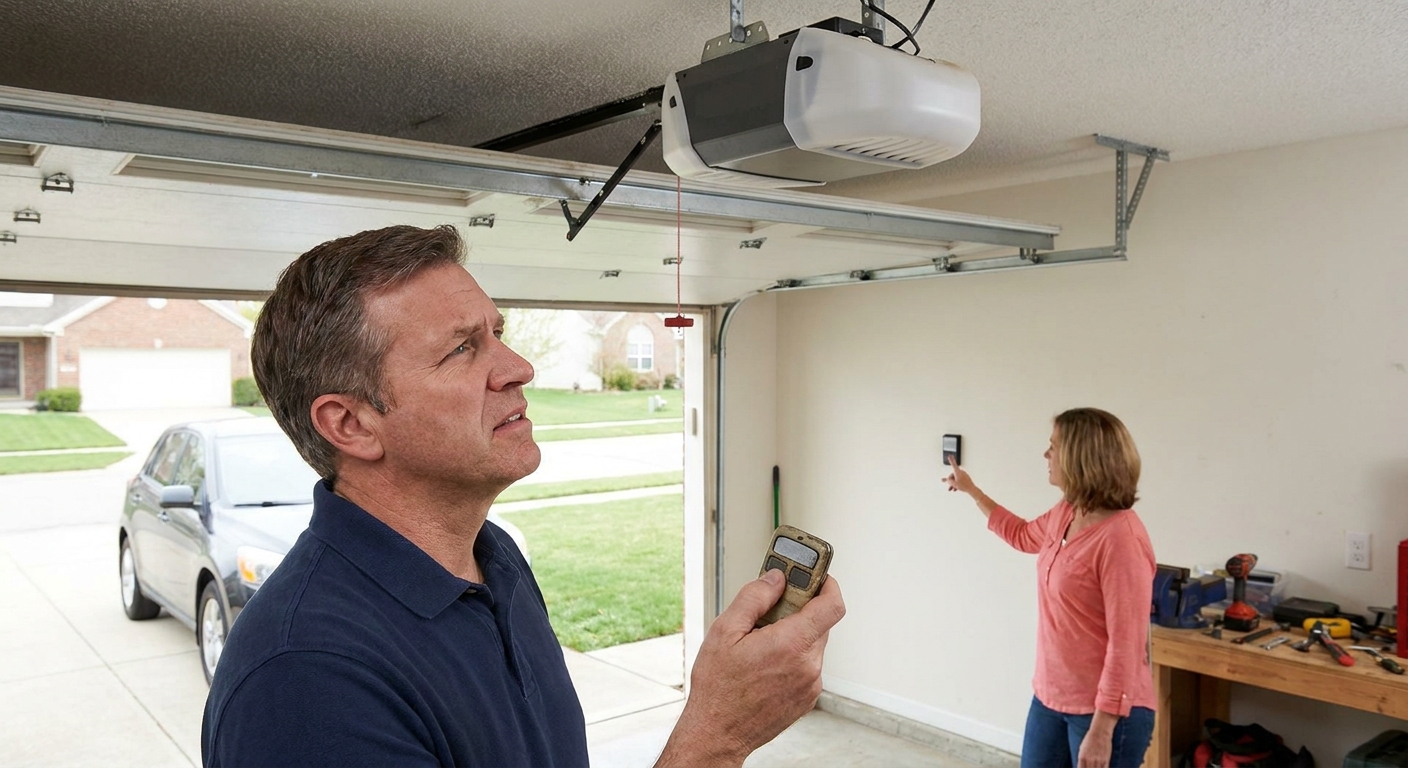
So here's what we need to understand. A clicking opener isn't broken in the traditional sense—it's stuck somewhere in the process. Every click has a cause. Every failure to start has a reason. And figuring out which part of the system is choking matters more than just getting the door open today. It matters for how long that opener keeps working tomorrow.
The Power Might Be There, But Something Else Isn't
We hear the click because the opener received a signal and attempted to engage. That's actually a good sign—it means the control board isn't completely dead. But between receiving the command and moving the door, a dozen things can go wrong. Most of the time, it's not the opener itself that's failed. It's a component connected to it or a safety feature doing exactly what it was designed to do.
When we troubleshoot this issue, we're looking at a handful of usual suspects. Some are easy fixes. Others require professional eyes. But all of them leave clues if we know where to look.
- Dead batteries in the remote: The wall button works fine, but the remote does nothing? Swap the battery before we assume anything else.
- Tripped breaker or loose plug: Even if the opener light turns on, a weak connection can prevent the motor from engaging.
- Frayed or disconnected wiring: Age and vibration can loosen connections inside the unit or along the wall switch line.
- Burned-out motor capacitor: This small part gives the motor the jolt it needs to start. When it fails, we get a click but no movement.
- Misaligned safety sensors: If the sensors think something's in the way, the opener won't budge—even if the path is clear.
Where We Start When the Click Happens
Before calling anyone, we run through a checklist. Most clicking issues can be diagnosed in under ten minutes if we're methodical. Start with the simplest possibilities and work toward the mechanical. Don't skip steps just because they seem obvious—those are the ones that catch people off guard.
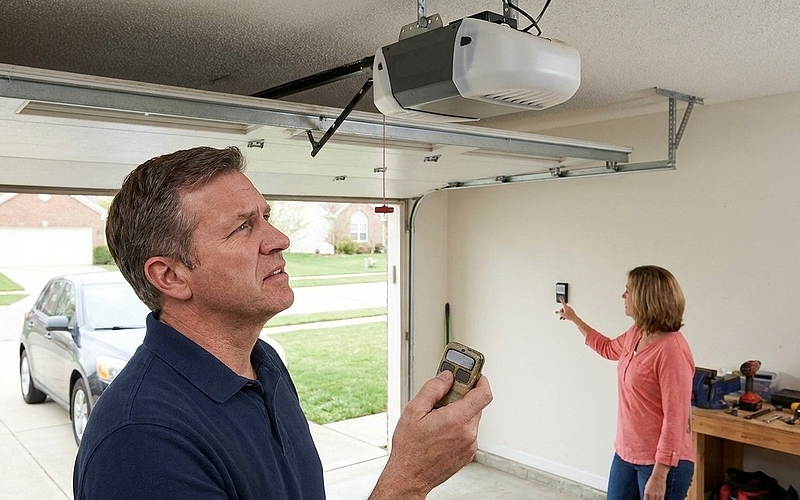
First, we test the power source. Plug something else into the same outlet to confirm it's live. Then we check the circuit breaker. If the breaker's fine and the outlet works, we move to the remote and wall switch. Try both. If one activates the opener and the other doesn't, we've narrowed it down. If neither works, the issue is deeper—likely in the opener itself or the door's mechanics.
- Confirm the outlet has power by testing with another device
- Replace remote batteries and retry the signal
- Press the wall-mounted button to see if it triggers movement
- Inspect the sensor lights—blinking usually means misalignment
- Look for visible obstructions along the tracks or under the door
- Listen closely—humming suggests motor strain, grinding points to gear issues
When the Sensors Block Everything
Safety sensors are non-negotiable on modern garage doors, and they're supposed to prevent the door from closing on anything in its path. But when they malfunction or get dirty, they can stop the door from moving at all—even when there's nothing there. We've seen this dozens of times in Centerville homes, especially after a storm or when spiders decide the sensor housing is prime real estate.
The sensors sit a few inches off the ground on either side of the door. They send an invisible beam across the opening. If that beam is interrupted—or if the sensors think it is—the opener won't operate. Dust, cobwebs, or a slight bump can throw them out of alignment. Cleaning the lenses and checking the indicator lights takes two minutes and solves the problem more often than not.
- Wipe down both sensor lenses with a soft cloth
- Check that each sensor's LED is solid, not blinking
- Adjust the sensors so they're directly facing each other
- Make sure nothing's blocking the beam, even partially
The Motor Tried, But the Capacitor Didn't Show Up
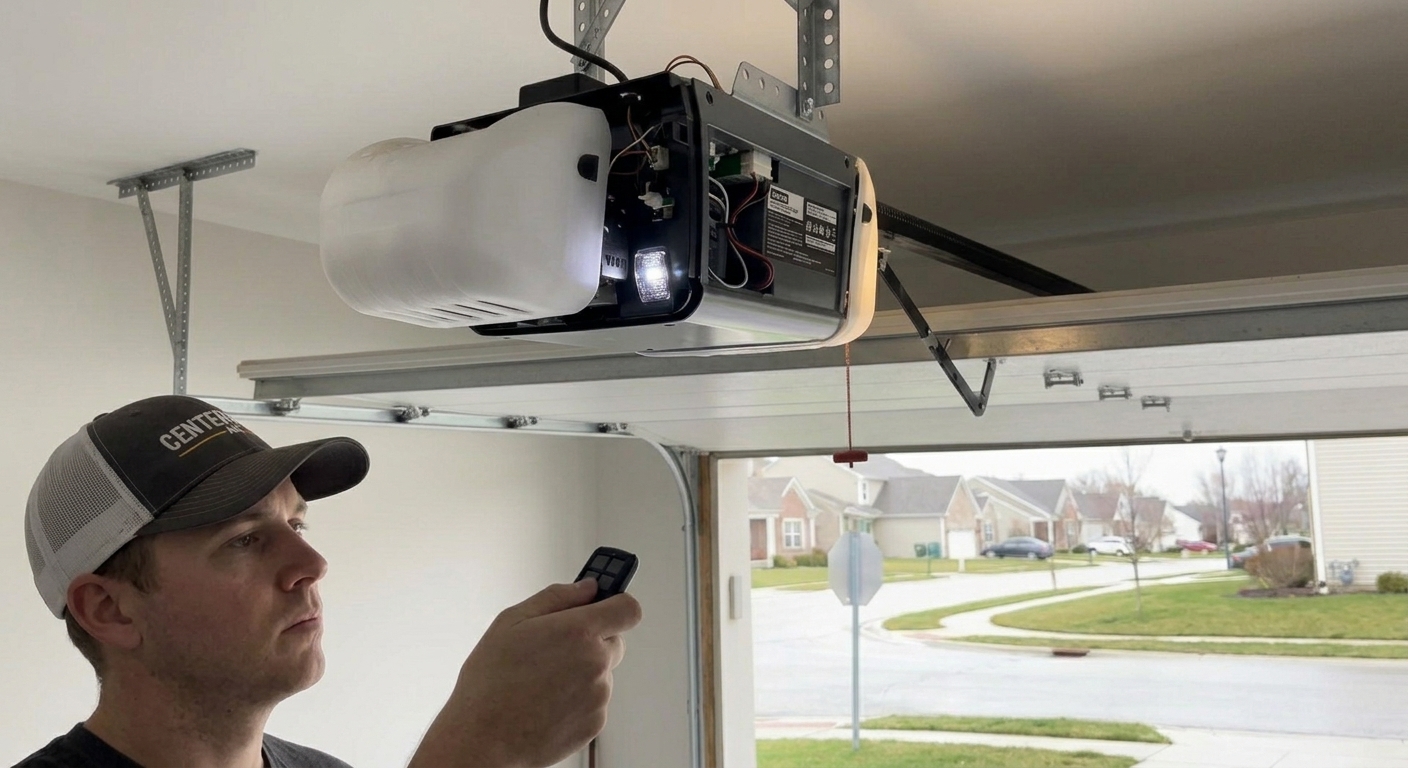
If we've ruled out sensors, power, and remotes, the next likely culprit is the capacitor. This component stores electrical energy and releases it in a burst to kick-start the motor. When it wears out, the motor tries to engage but can't generate enough force to move the door. We hear the click, sometimes even a faint hum, but the door stays put.
Replacing a capacitor isn't a DIY job for most people. It involves working with electrical components inside the opener housing, and doing it wrong can fry the motor or worse. But it's also one of the most common fixes we perform, and it's not expensive. If the opener's older than five years and showing this symptom, the capacitor's a strong candidate.
Sometimes the Door Itself Is the Problem
We focus so much on the opener that we forget the door has to cooperate too. If the springs are broken, the door's off its tracks, or something's physically jamming the mechanism, no amount of electrical troubleshooting will help. The opener isn't designed to force a stuck door—it's designed to assist a balanced one.
Manually disconnect the opener using the release cord and try lifting the door by hand. It should move smoothly and stay open halfway without help. If it drops, the springs are likely shot. If it won't budge at all, we're looking at a track or hinge issue. Either way, the opener's not the villain here.
- Pull the manual release cord and attempt to lift the door by hand
- Check for broken springs—they're obvious once we know what to look for
- Inspect the tracks for bends, debris, or rollers that have come loose
- Look at the hinges for cracks or rust that could be binding movement
- Test the balance—if the door won't stay open midway, the tension's off
Knowing When We're Out of Our Depth
There's a limit to what we should attempt on our own, especially with garage doors. Springs are under massive tension and can cause serious injury if handled incorrectly. Motors involve live electrical current. Tracks require precision alignment. If we've checked the basics and the door still clicks without moving, it's time to bring in someone who does this for a living.
In Centerville, we've got access to experienced garage door technicians who've seen every variation of this problem. They carry the tools, the parts, and the diagnostic equipment to pinpoint the issue fast. More importantly, they know how to fix it safely. Trying to force a repair we're not trained for doesn't just risk the door—it risks us.
Keeping the Opener Running Long After the Fix
Once the issue's resolved, we don't just walk away and hope for the best. Garage door openers need regular attention if we want them to last. Lubrication, sensor checks, hardware inspections—these aren't optional extras. They're the difference between a system that runs smoothly for a decade and one that limps along until it quits entirely.
Set a recurring reminder every six months. Hit the moving parts with garage door lubricant, not WD-40. Test the sensors. Tighten the bolts that vibrate loose over time. And if anything sounds off or looks worn, address it before it becomes a click-and-nothing-else scenario all over again.
- Lubricate rollers, hinges, and tracks twice a year
- Test the auto-reverse function monthly by placing an object in the door's path
- Clean sensor lenses and check alignment every few months
- Tighten loose bolts and screws as part of routine inspections
- Schedule a professional garage door maintenance annually to catch issues early
Don't Wait for the Click to Turn Into Complete Silence
A clicking opener that won't start is frustrating, but it's also a warning. It's telling us something in the system is on its way out. Ignoring it doesn't make it go away—it just gives the problem time to spread. And when openers fail completely, they don't do it gently. They strand us in the driveway, leave the garage open overnight, or worse, drop the door mid-operation.
We've walked through the most common causes, the troubleshooting steps that work, and the signs that tell us when to stop tinkering and call for help. The opener's still trying to do its job—that's what the click means. Our job is to figure out why it's stuck and get it moving again before the next press of the button does nothing at all. Understanding common garage door opener issues can prevent costly breakdowns. Regular garage door inspections help identify problems early. For persistent issues, consider reaching out for professional garage door repairs. If you're ready to address your opener problems, schedule a service appointment with our team today.
Let’s Get Your Garage Door Opener Working Again
We know how important it is to have a garage door opener you can count on every day. If troubleshooting hasn’t solved the problem or you’d rather leave it to the pros, we’re here to help get things moving smoothly again. Give us a call at 762-319-2931 to talk with our team, or schedule an appointment and let’s restore your peace of mind together.
‹ Back
Recent Posts
-
Is Your Garage Door in Macon Opening Slower Than Usual?
August 26, 2026
-
Garage Door Remote In Centerville Stopped Working?
August 12, 2026
-
-
-
Garage Door In Centerville Won't Close All The Way?
July 1, 2026